Local vs Long-Distance Transport – What’s the Difference?
February 14, 2026
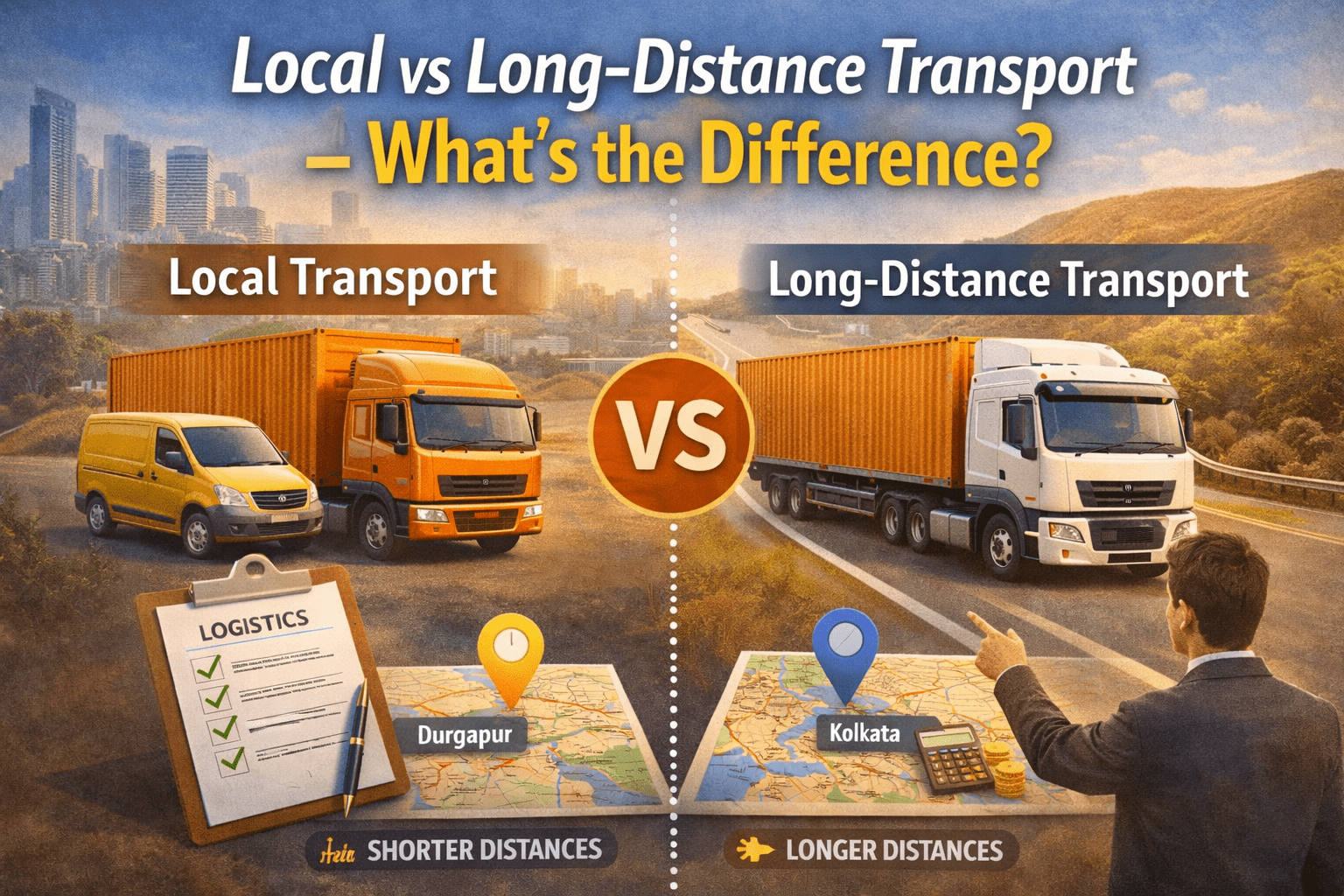
Local vs Long-Distance Transport – What’s the Difference?: Not all transportation is the same. Moving goods within a city and transporting cargo across states require different planning, pricing, and logistics management. Understanding the difference helps businesses and households choose the right service.
Let’s break it down clearly.
1️⃣ Distance & Coverage
Local Transport
- Operates within a city or nearby areas
- Short travel time
- Ideal for retail delivery, small shifting, or factory supply
Long-Distance Transport
- Covers intercity or interstate routes
- Requires highway travel planning
- Suitable for bulk cargo or relocation
For example, transport within Durgapur is local, while moving goods from Durgapur to another state is long-distance.
2️⃣ Vehicle Type
Local:
- Mini trucks
- Pickup vans
- Small open-body vehicles
Long-Distance:
- Container trucks
- Full Truck Load (FTL) vehicles
- Heavy trailers
Long-distance shipments often require stronger load security and weather protection.
3️⃣ Pricing Structure
Local Transport Pricing
- Charged by trip or hourly basis
- Short fuel cost
- Minimal toll charges
Long-Distance Pricing
- Based on distance (per km)
- Fuel consumption
- Toll charges
- Driver allowance
- Insurance
Long-distance naturally costs more due to time and operational factors.
4️⃣ Delivery Time
Local Deliveries
- Same-day or next-day service
- Flexible scheduling
Long-Distance Deliveries
- 1–5 days depending on distance
- Route planning required
- Weather and highway conditions impact timing
5️⃣ Documentation & Compliance
Local
- Basic invoice
- Minimal permits
Long-Distance
- E-way bill
- GST documentation
- Interstate permits
- Compliance checks
Paperwork becomes more important in long-route transport.
6️⃣ Risk & Safety Measures
Long-distance transport faces:
- Highway risks
- Weather exposure
- Extended cargo handling
Therefore, covered vehicles, load strapping, and insurance become critical.
🚚 Final Thoughts
Local transport is about speed and convenience.
Long-distance transport is about planning and durability.
Choosing the correct service depends on your shipment size, urgency, and destination. A reliable transport partner understands both — and advises you accordingly.