Industrial Goods Transportation: What Businesses Should Know
February 14, 2026
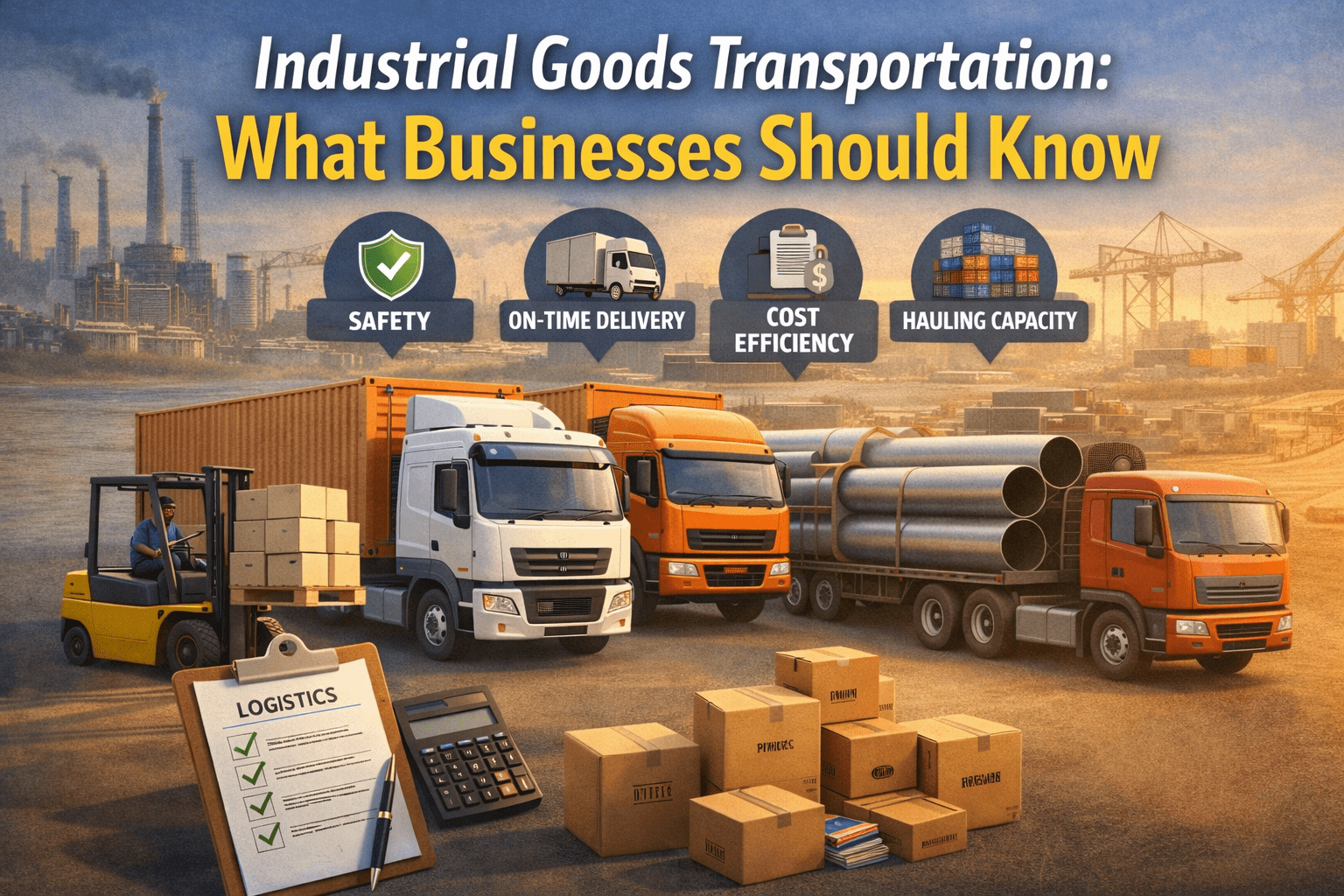
Industrial Goods Transportation is not regular cargo movement. It involves heavy materials, strict timelines, safety compliance, and financial risk. If you’re a manufacturer, supplier, or distributor, choosing the right logistics partner directly affects your production cycle and business reputation.
Here’s what every business must understand before transporting industrial goods.
1️⃣ Understand the Nature of Your Cargo
Industrial goods may include:
- Raw materials
- Heavy machinery
- Steel, cement, chemicals
- Factory equipment
- Large spare parts
Each category requires specific handling methods. Oversized and heavy cargo cannot be treated like standard freight.
2️⃣ Proper Vehicle Selection is Critical
Using the wrong vehicle causes delays and damage.
Common options include:
- Open body trucks for construction materials
- Container trucks for protected goods
- Trailers for heavy machinery
- Hydraulic trucks for loading-sensitive equipment
Vehicle capacity must match load weight and size.
3️⃣ Safety & Load Securing
Industrial cargo often weighs several tons. Without proper securing:
- Goods can shift during transit
- Equipment may get damaged
- Road accidents may occur
Professional transporters use:
- Heavy-duty straps
- Steel chains
- Wooden supports
- Anti-slip materials
Never compromise on load security.
4️⃣ Compliance & Documentation
Industrial transport requires:
- Valid permits
- GST invoices
- E-way bills
- Transport documentation
Delays at checkpoints often happen due to incomplete paperwork. Ensure all documents are ready before dispatch.
5️⃣ Route Planning & Timing
In industrial hubs like Durgapur, traffic patterns, factory schedules, and highway access must be considered.
Efficient route planning helps:
- Avoid congestion
- Reduce fuel costs
- Ensure timely delivery
- Maintain production deadlines
Late delivery can halt manufacturing operations.
6️⃣ Insurance Protection
Heavy industrial goods represent major investment. Always confirm:
- Transit insurance coverage
- Claim process clarity
- Damage liability terms
It’s better to plan for risk than suffer loss later.
7️⃣ Experience Matters
Industrial logistics is not beginner-level work. Choose a transporter who understands:
- Factory loading procedures
- Weight distribution
- Industrial safety standards
- Time-bound dispatch commitments
A reliable partner prevents operational disruptions.
🚛 Final Thoughts
Industrial goods transportation demands planning, precision, and professionalism. Businesses that choose experienced logistics partners avoid delays, reduce damage risk, and maintain smooth supply chain flow.
If your business depends on timely and secure cargo movement, don’t gamble with transport decisions. Choose experience. Choose reliability. Choose performance.